
Gardenship: Flora's Secret
ONEMT SGPCasual
0.00.00 Reviews
- Version
- 5
- Installs
- 50.00K
- Age Rating
- Everyone
Screenshots

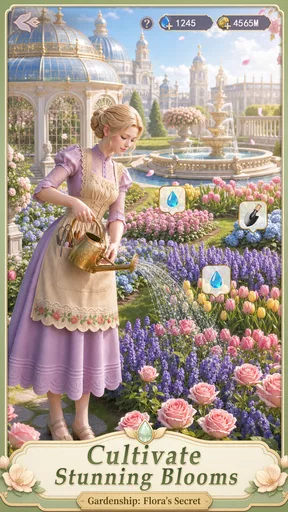
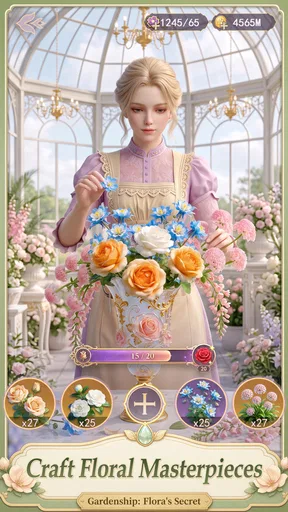
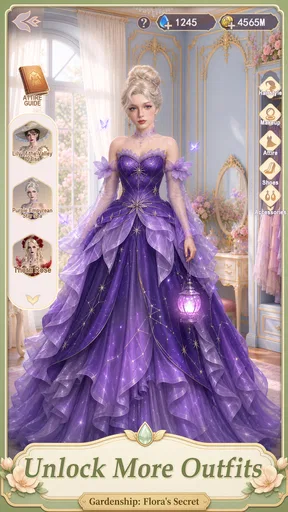
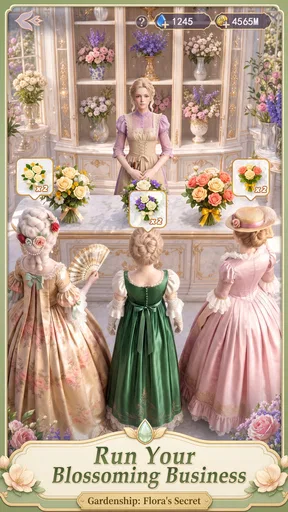
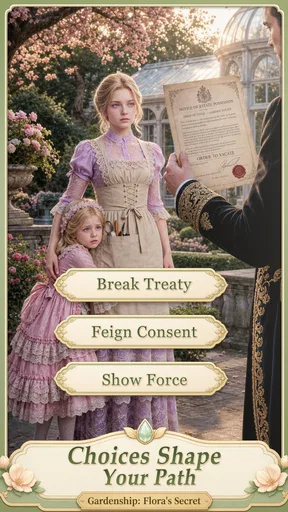

Our Review of Gardenship: Flora's Secret
 Analysis by Appyee
I approached Gardenship: Flora's Secret as the sort of casual game that can sit on a shared household device without demanding a full evening from everyone. Its central appeal is easy to understand: flowers, discovery, and the gradual feeling that a neglected royal estate is becoming lively again. That makes it approachable, but the real question is whether it works well when several people use the same phone or tablet, with different expectations about progress, purchases, and play time.
My overall impression is positive but measured. This is a free casual game from ONEMT SGP, aimed at Everyone, and it runs on devices using Android 7.0 or later. The current version is 5, while the Android listing shows over fifty thousand installs. Those details make it look accessible rather than intimidating, especially for a household looking for something gentler than a competitive action game.
How Gardenship fits into shared household play
The best shared-device scenario is a home where one person enjoys checking a garden for a few minutes, another likes uncovering the setting and flower-related discoveries, and nobody needs the game to become a serious contest. I can imagine leaving the tablet in a common room and letting different players take turns restoring the estate. One person might make progress before breakfast, while someone else checks the garden later and continues the same direction.
That arrangement has an important limitation: a shared device is not automatically a shared account. I would treat the game as belonging to the device profile currently in use, not as a household notebook where every player has a separate private garden. Before handing it to another person, I would make sure everyone understands whose progress is being advanced. That simple conversation matters more than the decorative theme, because casual games can still create frustration when one player changes the state another player expected to find.
For a child and an adult, the appeal is different. A younger player may enjoy the flowers and the visible transformation of the estate, while an adult may prefer the short, low-pressure sessions. I would not present it as an educational gardening tool, though. The floral setting gives the game personality, but the experience is still entertainment first. It is a good choice when the household wants a calm activity, not when it needs structured learning or a deep simulation of horticulture.
It also suits a shared device better than a game built around constant competition. There is less pressure to maintain a public ranking or react instantly to other players. That makes it easier to pass the device around without turning every session into a performance. On the other hand, anyone who wants a clearly separated profile for each family member should be cautious. I would check the device’s own user or app-management arrangements before assuming the game can keep everyone’s progress distinct.
What I would settle before the first session
My first practical step would be to decide who is allowed to make purchases. Gardenship is free to download, but it includes in-app purchases ranging from ninety-nine cents to ninety-nine dollars and ninety-nine cents per item. That is a wide enough range to make a shared-device conversation essential, especially if a child can reach the payment flow through the device account.
I would also agree on a simple rule: no one spends money to solve a disagreement about progress. If somebody wants to buy something, the household can discuss it first. This is not a criticism unique to this game; it is simply more important when the same screen is used by several people. The free entry point is helpful, but “free to start” should not be confused with “impossible to spend money.”
A second boundary concerns timing. Casual games are easy to open during a spare moment, yet a shared tablet can become a source of arguments if one player keeps it indefinitely. A short turn or a natural stopping point works better than trying to negotiate while somebody is already absorbed in the garden. I found that the game’s relaxed theme encourages this kind of routine, but the routine still has to come from the household rather than from assumptions about how everyone will behave.
Progress, handoffs, and keeping the experience understandable
When several people use one copy, coordination becomes part of the game. I would leave a quick note or say what was changed: which section of the estate was worked on, what the next goal appears to be, and whether any resource or item was used. This is especially useful for younger players, who may otherwise think that a missing object or altered garden is a mistake rather than a consequence of someone else’s turn.
A useful habit is to let one person make the larger decisions and let others handle the smaller discoveries. That gives the household a loose sense of cooperation without pretending that the game provides a formal family mode. For example, an adult could oversee spending and major progression, while a child explores the floral theme and chooses which visible detail to examine next. The arrangement keeps the experience collaborative while respecting the fact that control may be shared informally.
I would avoid switching rapidly between players in the middle of an activity. Even in a casual title, interruptions can make it unclear whether a choice was completed or whether someone simply backed out. A cleaner handoff is to finish the current interaction, return to a recognizable screen, and then pass over the device. This is a small tip, but it prevents the sort of confusion that makes a peaceful game feel unexpectedly troublesome.
The same approach helps adults who are sharing with a partner or roommate. One person may care about completing the estate in a particular order, while the other simply wants to look around. Agreeing on whether the garden is a joint project or one person’s save avoids a surprising amount of friction. If you both want independent progress, I would prefer separate device profiles or separate devices over relying on an assumed in-game boundary.
Age suitability and the role of trust
The Everyone content rating matches the gentle presentation I would expect from a flower-focused casual game. It is an inviting choice for a broad age range, particularly for players who do not want complicated controls or an intense competitive atmosphere. Still, an age rating does not answer every household question. It does not replace an adult’s judgment about spending, screen time, or whether a child is ready to manage shared progress responsibly.
For younger users, trust is more important than technical confidence. A child may know how to tap through menus without understanding that a purchase affects the household account or that a choice changes the shared garden. I would play alongside them at first, explain which buttons are safe to explore, and make the payment rule clear. That is a better setup than assuming the pleasant art makes every interaction self-explanatory.
For older adults or less experienced mobile players, the game’s casual identity is a strength. The flower-and-estate concept is easier to approach than a game filled with combat systems, complex team roles, or rapid reactions. I would recommend it to someone who enjoys gradual visual progress and discovery, but not to a player who needs extensive strategic depth. The royal setting adds atmosphere; it does not automatically turn the experience into a demanding management simulation.
Trust also matters between adults. If the device is linked to one person’s store account, another user should not assume that a free game has no financial consequences. I would keep the device owner involved whenever the game presents an optional purchase. That is not about treating every player as irresponsible; it is about making the account boundary visible when the screen itself is shared.
Where it stands beside other casual games
Compared with a straightforward match-three game, Gardenship offers a more continuous sense of place. The flowers and estate give the player a reason to care about what comes next, rather than making every session feel like an isolated board. That makes it a stronger pick for someone who likes a light narrative frame and visible restoration.
Compared with a full farming simulator, it is the less demanding option. I would choose it when I want a decorative, accessible experience instead of schedules, production chains, or detailed crop management. The trade-off is that players seeking a rich long-term simulation may find the estate theme too light. It is closer to a relaxing discovery game than to a serious agricultural sandbox.
It also differs from competitive casual games because its appeal is not based on beating another person in the same moment. That makes it more comfortable for a household with mixed ages or uneven skill levels. However, players who enjoy leaderboards, direct multiplayer pressure, or highly measurable mastery may prefer another category entirely. Gardenship’s strength is atmosphere and gradual engagement, not proving who is fastest.
The free price lowers the barrier to trying it, but the purchase range changes how I would recommend it for shared use. Someone playing alone can decide whether optional spending fits their habits. On a communal device, the same decision affects other people, so a paid, one-time game may sometimes be easier for a household to manage even if it offers less ongoing content. I would choose Gardenship when the family values a free starting point and can maintain clear purchase boundaries.
Small habits that make the game work better
My first tip is to treat the estate as a shared project only after agreeing on the owner of the progress. This sounds obvious, yet it is the most important distinction between a pleasant handoff and an argument. If the garden belongs to one player, others can watch or take turns with permission. If it belongs to everyone, decisions should be discussed before someone changes the direction of the restoration.
My second tip is to use the game as a short transition activity rather than an automatic filler for every quiet moment. A few minutes while waiting or winding down can fit the tone well. Giving it unlimited access during homework, meals, or bedtime is less sensible, particularly for children. The game may be casual, but a casual label does not guarantee that every play pattern is healthy for every household.
My third tip is to separate discovery from spending. Let players explore the floral setting and understand the estate before considering optional purchases. This gives the household a clearer idea of whether the core experience is enjoyable on its own. It also reduces the chance that a purchase is made simply because somebody wants to move past a moment of uncertainty.
My fourth tip is to keep expectations modest when installing it on an older device. Android 7.0 is the minimum operating system, so compatibility begins there, but that does not tell me how every individual phone or tablet will feel in daily use. I would install it, check that the device remains responsive, and make sure there is enough practical space for the app alongside the household’s other content before promising it as the main shared game.
Who should choose it, and who should move on
I would recommend Gardenship to a person who likes flowers, gentle estate restoration, and casual sessions that can be shared informally. It is particularly suitable for a household that can agree on one progress path, supervise optional purchases, and accept that the game is designed more for relaxed discovery than for deep strategy.
I would skip it if separate accounts are essential, if every family member wants an independent garden on the same device, or if the main goal is a robust multiplayer experience. I would also look elsewhere for a player who wants a detailed economy, serious gardening mechanics, or a constant stream of difficult challenges. The floral theme is the reason to try it, not a promise that it covers every style of simulation or competition.
There is also a difference between liking the idea of a royal estate and enjoying the actual rhythm of gradual progress. If you need immediate action, this may feel too patient. If you prefer games that reward observation and let a setting become more appealing over time, the slower approach is more likely to work. I found that distinction more useful than simply calling it “relaxing,” because relaxation depends heavily on whether the pace matches your taste.
My household verdict
After considering it as a shared-device game, I see Gardenship as a friendly, low-pressure choice with one important condition: the household must provide the boundaries. The Everyone rating and casual presentation make it easy to introduce, and the free download makes trying it uncomplicated. The estate-and-flower concept gives it more identity than a completely interchangeable time-filler, while the lack of competitive pressure makes handoffs less stressful.
Its weak point is not the theme but the uncertainty that can appear around shared progress and optional spending. I would not install it on a family tablet and assume the problem is solved. I would decide whose account is being used, explain what counts as an approved purchase, and establish when the device is available. Those steps turn the game from a possible source of small disputes into a manageable shared activity.
For my own recommendation, I would say: try it if your home wants a calm flower-and-estate game that different ages can understand, and keep the first sessions supervised when children are involved. The developer is ONEMT SGP, the game is currently at version 5, and its modest install base suggests a smaller experience rather than a title I would choose for a huge online community. That is perfectly acceptable here. The best reason to play is the shared feeling of bringing a quiet estate to life, not chasing depth or competition.
In the end, I would keep it on a shared device when everyone agrees on how the garden is managed. I would remove it from the shortlist when independent saves, advanced simulation, or tightly controlled household accounts matter more than approachable floral discovery. Within its lane, it is an appealing casual game, but it works best when the people around the screen coordinate as carefully as the player tending the estate.
Verdict
Strengths of Gardenship: Flora's Secret
- Relaxing match-3 gameplay suitable for short sessions
- Garden restoration gives progress a clear visual reward
- Story chapters add purpose beyond solving individual puzzles
- Bright floral artwork creates a pleasant, calming atmosphere
- Simple controls make it accessible for casual players
Limitations of Gardenship: Flora's Secret
- Later levels may rely heavily on boosters and special moves
- Lives can limit how long you play in one sitting
- Some story and garden upgrades progress slowly
- Frequent events may feel repetitive after extended play
- Requires an internet connection for some features
Other Releases by ONEMT SGP
View All
King's Choice: Rule Your Fate
Role Playing4.1

Mech Assemble: Zombie Swarm
Action4.5
Similar Picks in This Category
View All
My Talking Angela
Outfit7 Limited4.2

My Talking Tom
Outfit7 Limited4.3

Pou
Zakeh4.2

My Talking Tom 2: Pet Game
Outfit7 Limited4.3

Candy Crush Saga
King4.6

Bridge Race
Supersonic Studios LTD4.1
Frequently Asked Questions
What is Gardenship: Flora's Secret about?
Gardenship: Flora's Secret is a casual puzzle and garden-restoration game that combines match-style challenges with a story-driven adventure. As you progress, you complete levels, earn resources, unlock new areas, and help develop a beautiful garden environment. The game is designed for relaxed play, with decorative customization and narrative elements encouraging you to continue beyond individual puzzles.
Is Gardenship: Flora's Secret free to download and play?
The game can generally be downloaded for free, allowing players to try its main features without paying upfront. However, free-to-play games commonly include optional in-app purchases for extra lives, boosters, currency, energy, or faster progress. Depending on the game version and device, advertisements may also appear. Check the store listing and purchase settings before downloading, especially if children use the device.
Does Gardenship: Flora's Secret require an internet connection?
An internet connection may be needed for certain features, including downloading additional content, synchronizing progress, displaying advertisements, processing purchases, and receiving updates. Some basic gameplay may work temporarily offline, but this should not be assumed for every mode or device. Connecting regularly is recommended so your progress can be saved correctly and online events or bonuses remain available.
Is Gardenship: Flora's Secret suitable for children?
Gardenship: Flora's Secret is generally presented as a colorful, accessible game suitable for casual players, and its puzzle and decoration mechanics are easy to understand. Nevertheless, parents should review the age rating, privacy information, advertisements, and in-app purchase options before allowing children to play. If needed, enable parental controls or require authentication for every purchase to avoid accidental spending.
What should I know about progress, updates, and in-app purchases?
Progress may be linked to the game’s supported account or platform services, but the exact backup and transfer options can vary between Android and iOS. Before changing devices or reinstalling, confirm that your progress is synchronized. Updates can introduce new levels, events, balancing changes, or technical fixes. Purchases are normally optional, although they may speed up recovery and progression.
Play our best games!


